Associate Nicholas Arthurell reflects on our recent projects across Guangzhou.
As China continues to invest heavily in its mass transit networks, the challenge no longer lies in moving people efficiently but ensuring infrastructure contributes positively to urban life.
Our recent work for Guangzhou Metro demonstrates how stations and associated infrastructure can become part of the public realm rather than exist apart from it.
Across Baiyun Metro Station, the Guangzhou Metro Line 11 Public Realm programme, and the design of two stations for Guangzhou Metro Line 28, we developed an approach that combines passenger experience, landscape and civic identity within some of the city's most complex transport environments.
The most expansive of these commissions, Guangzhou Metro Line 11 Public Realm, addresses the often-overlooked impact of above-ground metro infrastructure. Ventilation shafts, escape stairs, lift cores and service compounds typically occupy valuable urban land while contributing little to the quality of the streetscape. Our response was to consolidate these elements into a coordinated family of architectural interventions across nine stations on the line.
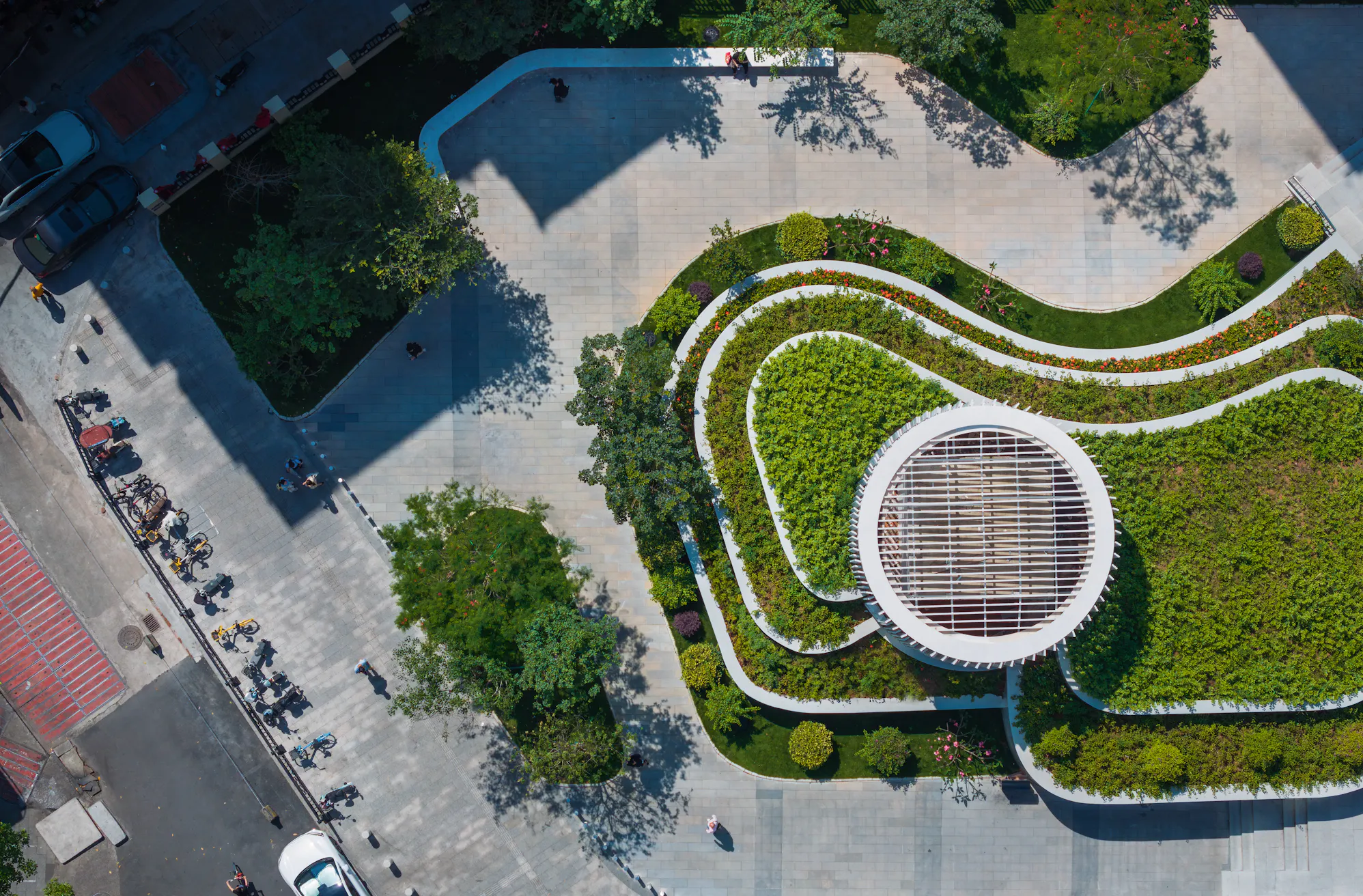
Using a system of standardised yet adaptable components, the project creates a coherent architectural language while reducing visual clutter and improving pedestrian movement. Landscaping plays a central role with planting, permeable surfaces and shaded public space softening the impact of technical infrastructure while supporting broader environmental objectives of stormwater management and urban cooling.
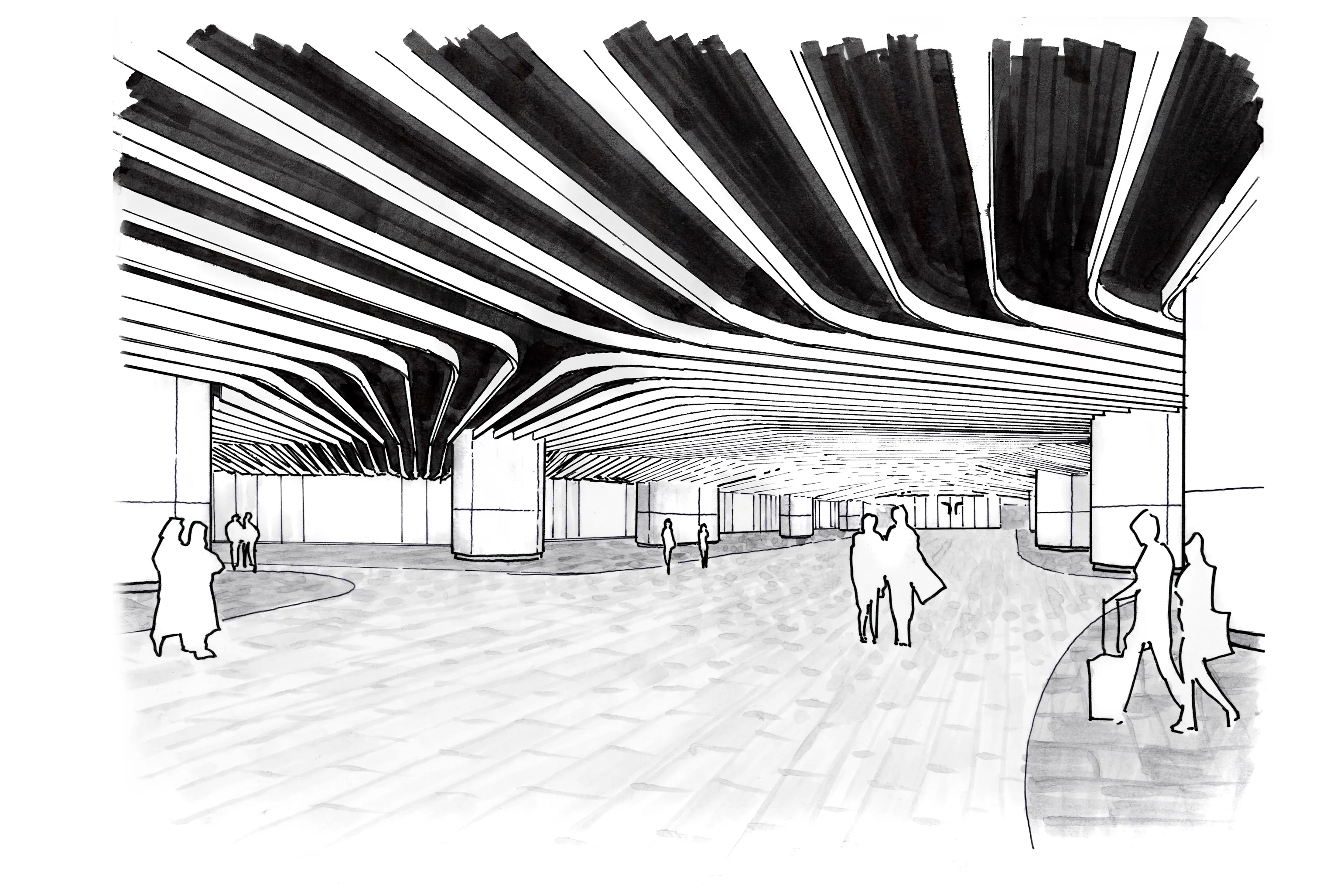
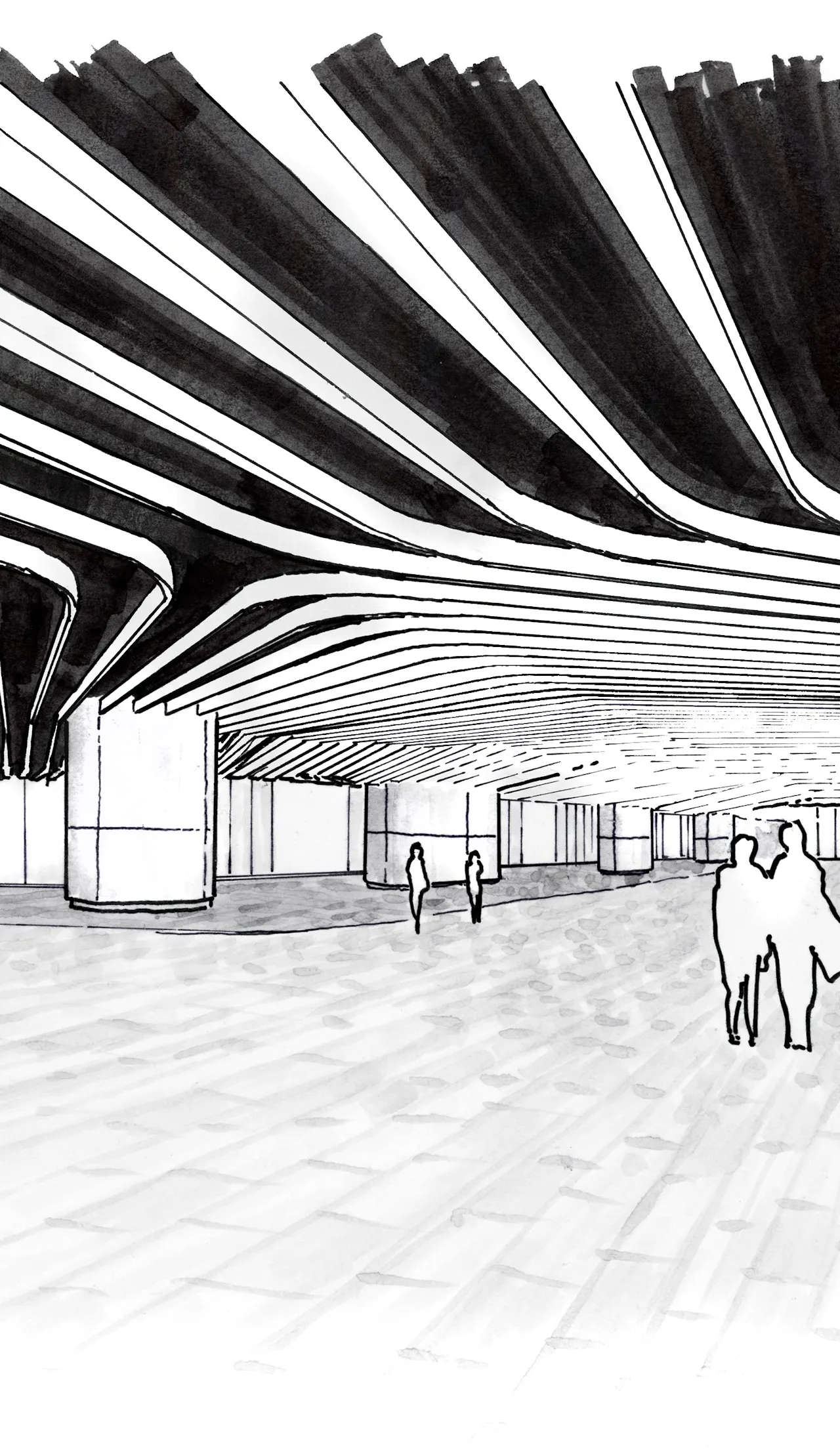
A similar emphasis on user experience informed the design of Baiyun Metro Station. Working within the constraints of a fixed station box we focused on improving circulation and wayfinding to create a clearer and more intuitive passenger journey.
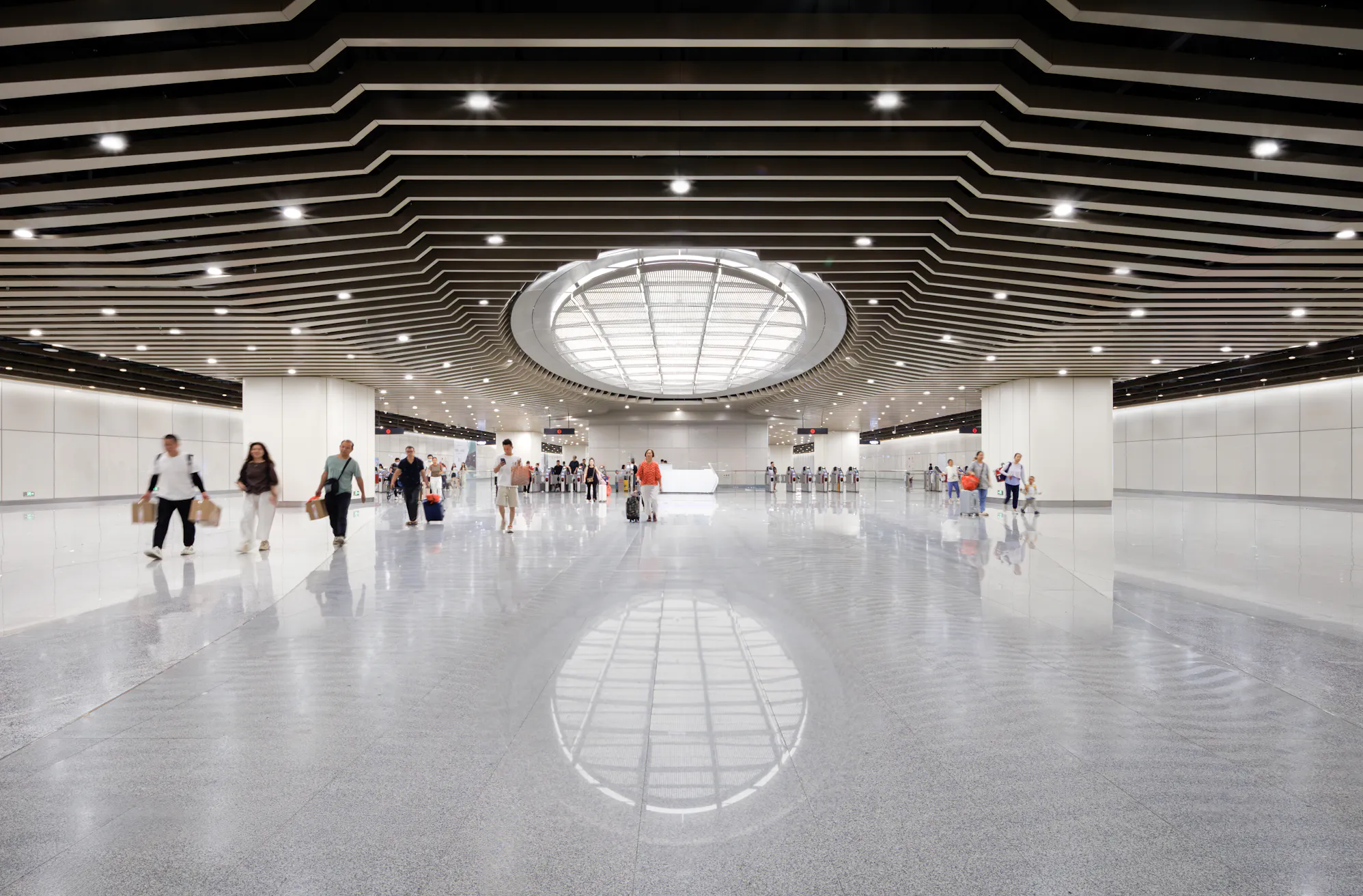
Drawing on Guangzhou's historic ceramic traditions, the design introduces a local cultural reference into a highly engineered environment without compromising functionality. Developed through extensive physical modelling, the geometry balances architectural expression with the practical demands of a high-capacity transport hub.
Throughout the station, circulation routes are simplified and vertical movement is rationalised with spatial volumes opened up to improve orientation. Natural light is maximised at entrances, reducing reliance on signage and creating a calmer passenger experience.
Alongside Baiyun Station and the Line 11 public realm programme, we’ve also worked on the design of two stations for Metro Line 28, extending the same principles across another major transit corridor. Together, the projects demonstrate how architecture, landscape and infrastructure can operate as a single civic system.
At a time when transport investment is often measured through capacity and efficiency alone, this work in Guangzhou offers a broader definition of success: infrastructure that not only moves people through the city but improves the experience of the city itself.